Percy Fawcett and the expedition that never returned
He was looking for a city of stone, with arches, a statue and inscriptions — a European idea of a city. What existed in that region was something else, far larger and made of earth. He may well have walked right over it without recognizing it.
- Where
- Upper Xingu, Mato Grosso
- Left Cuiabá
- April 20, 1925
- Last word
- May 29, 1925
- Expedition
- three men
- Source of the legend
- Manuscript 512, from 1753
- Bodies
- never identified
In May, the Upper Xingu is still coming out of the rains. The grass in the open areas grows past the waist, the ground holds water and the mosquitoes give no respite. It is a mosaic — dense forest in some stretches, flooded grassland in others, wide, slow rivers of dark water. It is not the compact forest the word "Amazon" usually evokes. It is a place where one walks, and where it is perfectly possible to pass beside something large without seeing it.
On May 29, 1925, from a spot he called Dead Horse Camp, Percy Fawcett wrote the last letter that reached the world. He was with his son Jack, 21, and with Raleigh Rimell, Jack's friend and a year and a half older. He had dismissed the porters. He headed east.
Nothing was ever heard again. Over the next hundred years, the disappearance became one of the most retold stories of exploration — and, like almost every much-retold story, it picked up numbers and certainties that do not survive checking.
01The man
Percival Harrison Fawcett was born in Torquay, England, on August 18, 1867. He became a lieutenant in the Royal Artillery in 1886, joined the Royal Geographical Society in 1901 and, in 1906, was commissioned by the RGS itself to map the border between Bolivia and Brazil — a region then in dispute, at the height of the rubber boom.
This matters, because it defines his credibility. Fawcett was not a romantic adventurer: he was a professional surveyor, good at the job, with years of fieldwork in terrain that killed those who did not know it. He reached La Paz in June 1906, traced the source of the Verde River in 1908, and was on the Heath River, on the border between Bolivia and Peru, in 1910. He retired from the Army on January 19 of that year to devote himself to exploration — and would return to uniform in the First World War, commanding artillery in Flanders and reaching lieutenant colonel in 1918. It is from that stint that the "Colonel Fawcett" by which he became known comes.
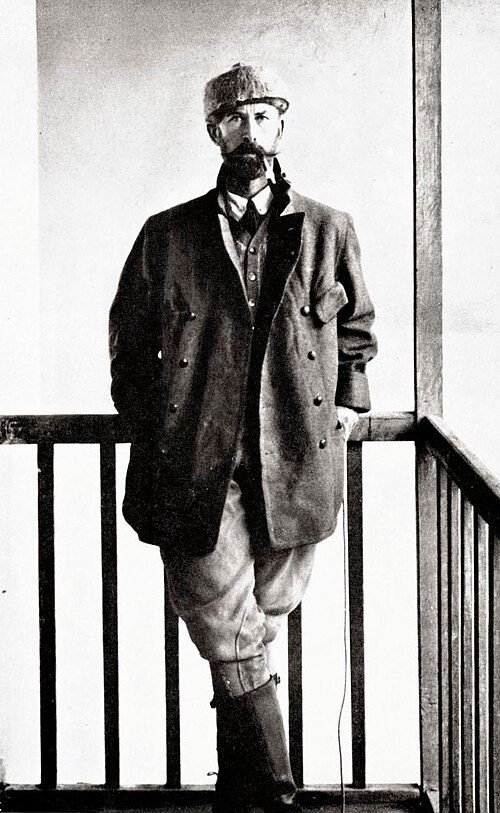
His reputation was large enough to seep into fiction: Arthur Conan Doyle, whom he befriended through his school friend Bertram Fletcher Robinson, used his accounts as raw material for The Lost World. The idea of a South American plateau hiding something ancient entered popular culture through that door.
02Manuscript 512
The obsession has a documentary origin, and it is in Rio de Janeiro. Kept at the National Library, the so-called Manuscript 512 is an anonymous account from 1753, attributed by the historian Pedro Calmon, by conjecture, to a bandeira (an expedition into the interior) led by João da Silva Guimarães. The text describes the discovery, in the backlands of Bahia — between the Paraguaçu and Una rivers —, of the ruins of an abandoned city: wide streets, arches, a statue, and a temple with inscriptions that the author compares to hieroglyphs.
The document is real; it is the city it describes that was never found. The most sober modern readings point to natural rock formations of the Chapada Diamantina interpreted as architecture, or to deliberate exaggeration in an account written to justify expenses and win sponsorship — a literary genre common among bandeirantes.
03Z
By around 1914, Fawcett had already formulated the hypothesis that would consume him. Somewhere in Mato Grosso there would be the remains of an ancient and sophisticated civilization, which he called simply Z — a name chosen, among other reasons, so as not to give away the location to rivals.
In the more restrained versions, Z was a complex, forgotten Indigenous culture. In the less restrained ones — and Fawcett wrote both —, it was heir to Atlantis, with lost technology and knowledge. This oscillation between the rigorous surveyor and the convinced mystic is the most interesting trait of the man, and the one most often erased in both directions: he was neither a charlatan nor merely a scientist.
041925
The final expedition left Cuiabá on April 20, 1925. There were three: Fawcett himself, aged 57; his son Jack, 21, who would turn 22 in May; and Raleigh Rimell, 23. They were accompanied by two Brazilian hired hands, two horses, eight mules and two dogs — support that would be dismissed weeks later. The choice to finish the journey as three, without a large retinue, was deliberate — Fawcett believed that a small group frightened the peoples of the region less and moved faster.
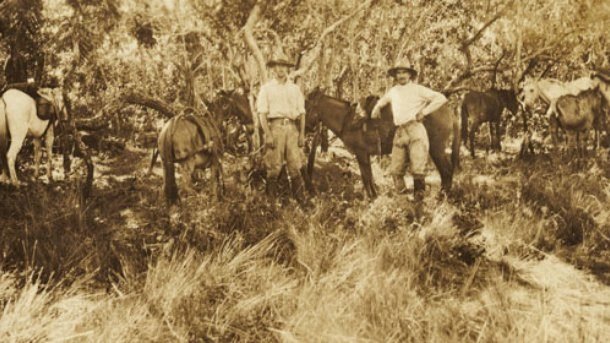
The last letter left Dead Horse Camp on May 29, carried back by the porters dismissed there. Fawcett wrote that they would head east and asked that no one come looking for them if there was no news — a request that, predictably, no one obeyed.
One detail of the account tends to slip by: Raleigh Rimell had had an infected foot for weeks and was walking with difficulty. Three men, without support, one of them sick, entering on foot a region they did not know, at the end of the rainy season.
05What came after
The disappearance prompted some thirteen search expeditions over the decades, some funded by newspapers, others by enthusiasts — although only one of them actually reached the Xingu. That is where the most repeated number in the story comes from — the claim that a hundred people died looking for Fawcett.
That number does not hold up, and it is worth recording how it spread. It reached the general public through David Grann's book, which picked it up from an interviewee as an estimate. The historian John Hemming, one of the leading experts on Amazonian exploration, disputes it sharply: only one search expedition actually reached the Xingu, George Dyott's in 1928, and without deaths; the only one who died was Albert de Winton, who went in alone in 1935. For Hemming, the total is one.
In 1951, Orlando Villas-Bôas received from the Kalapalo a set of bones presented as Fawcett's, along with the account that the expedition had been killed. The bones were sent for examination. The Royal Anthropological Institute, in London, concluded that they were not his — stature and teeth did not match Fawcett's records. Brian Fawcett, the explorer's son, refused to accept them.
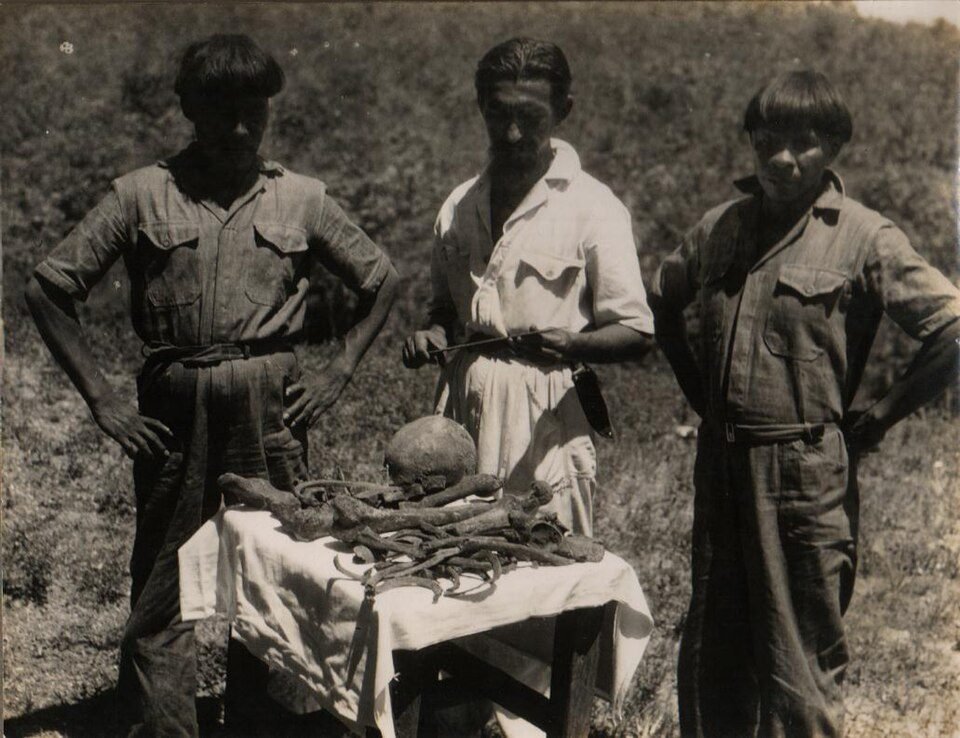
There is also the Kalapalo oral account, collected by researchers decades later: the three stayed in the village, then left for the east despite the warning that there were groups in that direction who received strangers with violence, and the smoke of their campfire was seen for five nights in a row — until it stopped. The local reading was that they had been killed.
06What was really there
The turn in the case did not come from a search. It came from archaeology, and it took seventy-five years.
From the 1990s onward, the anthropologist Michael Heckenberger worked in the Upper Xingu together with the Kuikuro — a people who, by every indication, descend from the region's ancient inhabitants. What he documented in the complex known as Kuhikugu, at the headwaters of the Xingu, was not a village: it was a network.
About twenty settlements and villages, linked by straight roads cut through the forest, with bridges over rivers and canals for canoes. Defensive ditches and palisades. Plazas roughly one hundred and fifty meters across. Amazonian dark earth — anthropogenic soil — indicating long occupation and intensive agriculture. The population estimate for the whole reaches tens of thousands of people, with individual sites possibly exceeding five thousand. The occupation runs from about one thousand five hundred years ago until roughly four hundred years ago, when epidemics brought by Europeans emptied the region.
Fawcett was right about the premise and wrong about everything the premise meant. There were, indeed, large and organized societies in the heart of the continent, where the anthropology of the time insisted there could only be small bands. But they did not build in stone: they built in earth, wood and thatch, with their own hydraulic engineering and urbanism. A site like that, four hundred years after abandonment and covered by forest, looks nothing like an arch or a hieroglyph. It looks like a gentle mound and a strangely straight clearing.
He may have passed through Z. The problem is that Z did not have the shape he carried in his head. The most uncomfortable hypothesis in the case
07The readings, from the most sober to the most improbable
They died of disease, hunger or exhaustion
The most economical explanation and the one that needs the fewest assumptions. Rimell had an infected foot before they left Dead Horse Camp. They went on foot, without porters, without resupply, at the end of the rainy season, in a region none of the three knew. Fawcett was 57 years old.
In a situation like that, death needs no villain. It needs only an infection that spreads, a leg that gives out, and two companions who can neither carry the third nor go back alone.
They were killed by an Indigenous group of the region
Supported by the Kalapalo oral account — the departure eastward despite the warning, the smoke seen for five nights and then cut off — and by the fact that there were, indeed, groups in that direction who received strangers with violence, after decades of violence by rubber tappers in the basin.
What weakens it is the 1951 set of bones, which was presented as proof of this version and did not survive examination. That does not invalidate the oral account; it invalidates that set of bones. They are different things, and coverage of the case almost always confuses them.
Fawcett chose to disappear
The hypothesis that he found what he was looking for — or gave up on the world he came from — and chose to stay, founding a community or joining a local people. His mystical writings leave some room for it, and he did speak of Z in almost religious terms.
Against it: he took his own 21-year-old son and a sick young man barely older. Planning a permanent disappearance while dragging two people along in those conditions is a psychological profile hard to reconcile with everything else known about him.
They found the city and the find was suppressed
The cover-up version — an extraordinary discovery, a silenced explorer. It presupposes an institution with an interest in hiding it and the ability to do so for a century.
The reality is the exact opposite. The civilization of the Upper Xingu was found, excavated, published in scientific journals and publicized around the world — and laser surveying today projects between twenty-four and thirty thousand pre-colonial structures in the southwestern Amazon, far from the Xingu, from 432 structures detected in flight, as dossier 002 details. No one hid anything. The discovery took decades because it required an instrument that did not exist, not because anyone was interested in burying it.
08Chronology
- 1753A bandeira records, in the document now called Manuscript 512, the discovery of ruins with arches, a statue and inscriptions in the backlands. The paper is at the National Library; the city never turned up.
- August 18, 1867Percival Harrison Fawcett is born in Torquay, England.
- 1906 – 1909The Royal Geographical Society commissions him to map the Brazil–Bolivia border; he traces the source of the Verde River in 1908.
- 1910He travels up the Heath River, on the Bolivia–Peru border, and retires from the Army on January 19.
- c. 1914Fawcett formulates the Z hypothesis, an ancient civilization somewhere in Mato Grosso.
- April 20, 1925The final expedition leaves Cuiabá: Fawcett, 57; his son Jack, 21; Raleigh Rimell, 23; and two Brazilian hired hands with pack animals.
- May 29, 1925Last letter, from Dead Horse Camp. They dismiss the porters and head east.
- 1951 – 1952Orlando Villas-Bôas receives from the Kalapalo a set of bones attributed to Fawcett. The examination at the Royal Anthropological Institute concludes they are not his.
- 1990s and 2000sMichael Heckenberger documents, with the Kuikuro, the Kuhikugu complex: about twenty settlements linked by roads, bridges and canals, with ditches and palisades.
- 2009David Grann publishes The Lost City of Z, which reconstructs the case and brings the archaeological find to the general public.
- 2026A laser survey in Acre and Amazonas detects 432 structures in flight and estimates 24 to 30 thousand in the southwestern Amazon, showing, in another part of the Amazon, the scale Fawcett sensed and could not describe.
09What remains open
Where the three are. No body has been identified. No unequivocal personal object has turned up. No search expedition produced material that survived examination. A hundred years later, the raw datum of the case is still an absence.
How far they got. Dead Horse Camp is the last confirmed point, and not even its exact location is agreed upon. Everything that comes after — the eastward direction, the days of walking, the distance covered — is reconstruction from a letter and from oral memory.
And what he would have said. This is the question this dossier cannot let go of. Had Fawcett lived another twenty years and seen what Heckenberger excavated, would he have recognized Z in a forest-covered earthwork, in a plaza one hundred and fifty meters across, in a dark soil of ancient occupation? Or would he have kept walking, looking for arches and hieroglyphs, because that was what Manuscript 512 had promised?
10Frequently asked questions
Who was Percy Fawcett?
A British surveyor and explorer, born in Torquay in 1867. An artillery officer, he was commissioned by the Royal Geographical Society, in 1906, to map the border between Bolivia and Brazil, and rose to lieutenant colonel in the First World War — hence “Colonel Fawcett.” See the man.
What is the Lost City of Z?
The name Fawcett gave, around 1914, to the remains of an ancient civilization he believed existed somewhere in Mato Grosso. In the restrained versions, it was a complex, forgotten Indigenous culture; in the others, heir to Atlantis. The idea came from Manuscript 512, from 1753, which describes a stone city with arches and inscriptions. See Z.
What happened to Percy Fawcett?
No one knows. The last letter left Dead Horse Camp on May 29, 1925; he headed east with his son Jack and Raleigh Rimell, and no body has been identified. The most economical explanation is death by disease, hunger or exhaustion; the idea that they were killed by an Indigenous group rests on the Kalapalo oral account and remains disputed. See the readings.
Were Percy Fawcett's bones ever found?
No. In 1951, the Kalapalo handed Orlando Villas-Bôas a set of bones presented as his, but the Royal Anthropological Institute, in London, concluded they were not: stature and teeth did not match. See what came after.
Did the Lost City of Z exist?
Not as Fawcett imagined it. There were, indeed, large societies in the Upper Xingu: Michael Heckenberger documented with the Kuikuro the Kuhikugu complex, with about twenty settlements linked by roads, bridges and canals. But it was made of earth, wood and thatch, not of stone with arches. See what was really there.
11Sources consulted
This dossier is original writing. The sources below were consulted to verify dates, numbers and attributions; none was reproduced.
- Consolidated encyclopedic entry on Percy Fawcett — biography, career with the Royal Geographical Society, the 1925 expedition and the episode of the bones.
- Grann, D. — The Lost City of Z, 2009: reconstruction of the case, the Kalapalo oral account and the controversy over the number of deaths in the searches.
- Hemming, J. — rebuttal of the figure of a hundred deaths on search expeditions.
- Heckenberger, M. et al. — work on pre-Columbian urbanism and anthropogenic landscapes in the Upper Xingu, including the Kuhikugu complex.
- Public documentation on Manuscript 512, kept at the National Library in Rio de Janeiro.
- Public domain photographic records of the 1925 expedition and of the 1951–1952 episode.